Johan

Johan Oosthuizen is a full-time internet marketer and provides people with guidance on how to better themselves, by showing them how to live a healthier life, make more money and how to improve their relationship with other people

10 Unusual Ways To Improve Yourself
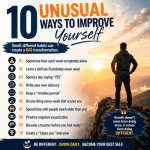
Unusual Ways To Improve YourselfHere are 10 unusual ways to improve yourself. These go beyond the typical advice of “read more books” or “exercise regularly” and focus on developing your mind, confidence, and personal growth in unexpected ways.

1. Spend One Hour Each Week Completely Alone

Most people are constantly surrounded by noise, social media, or other people.

Deliberately spend one hour without your phone, music, or television. Just think, write, or observe and let your positive attitude take you further.

Benefits:

  • Increases self-awareness
  • Reduces stress
  • Helps solve personal problems more creatively
2. Learn a Skill You’ll Probably Never Need

Take up something unusual such as:

  • Lock picking (legally)
  • Calligraphy
  • Juggling
  • Origami
  • Morse code

Your brain loves novelty, and learning unfamiliar skills strengthens problem-solving abilities.

3. Spend a Day Saying “Yes”

Choose one day where you say yes to reasonable opportunities.

Examples:

  • Talk to someone new.
  • Try unfamiliar food.
  • Attend an event.
  • Learn something outside your comfort zone.

Many opportunities are lost because of automatic “no” responses.

4. Write Your Own Obituary

Imagine your life has ended.

What would you want people to remember about you?

This exercise often reveals:

  • What truly matters
  • What you’re neglecting
  • What kind of person you want to become
5. Keep a “Mistake Journal”

Instead of only writing achievements, record:

  • What went wrong
  • Why it happened
  • What you learned
  • How you’ll avoid repeating it

High performers improve because they study their failures without dwelling on them.

6. Do One Thing Every Week That Scares You (Slightly)

Not dangerous things—but uncomfortable ones.

Examples:

  • Give a compliment to a stranger.
  • Speak first in a meeting.
  • Post your work online.
  • Ask for feedback.

Confidence grows from repeated exposure to discomfort.

7. Spend Time With People Much Older Than You

Most people only seek advice from peers.

Older individuals often provide:

  • Life perspective
  • Financial wisdom
  • Relationship advice
  • Stories that no book can teach

Experience is one of the greatest teachers.

8. Practice “Negative Visualization”

Imagine temporarily losing something you value:

  • Your health
  • Your job
  • Your home
  • Someone you love

This ancient Stoic practice isn’t about pessimism—it builds gratitude and resilience.

9. Become a Teacher Before You Feel Ready

Teach what you’ve recently learned.

You don’t need to be an expert.

Explaining ideas forces you to:

  • Understand concepts deeply
  • Organize your thoughts
  • Discover knowledge gaps
  • Build confidence

Teaching accelerates learning.

10. Create a “Future You” Interview

Write an interview with yourself five years from now.

Ask questions like:

  • What habits changed your life?
  • What mistakes did you stop making?
  • What are you most proud of?
  • What advice would you give your younger self?

Then answer as your future self.

This technique helps clarify your goals and align today’s actions with the person you want to become.

Our Final Thoughts

Personal growth doesn’t always come from doing more—it often comes from doing different things. Small, unconventional habits can reshape your mindset, improve resilience, and open doors you never expected.

The key is consistency. Choose just one or two of these ideas and practice them for a month. The cumulative effect is often far greater than trying all ten at once. These unusual things will improve you

Share and Enjoy !

Main Reason for Not Losing Weight Might Be Sitting Right Below Your Nose

Not Losing WeightHave you tried every popular diet, counted every calorie, exercised until you were exhausted, and still found yourself not losing weight?

If that sounds familiar, you’re certainly not alone.

Millions of people blame themselves when the scales refuse to move. They assume they lack discipline, aren’t exercising enough, or simply haven’t found the “perfect” diet. But what if the real reason isn’t your diet at all?

What if the answer has been sitting right below your nose all along?

One of the most overlooked causes of stubborn weight gain and an inability to lose weight is an underactive thyroid, also known as hypothyroidism.

Why Your Thyroid Matters

Your thyroid is a small butterfly-shaped gland located at the front of your neck. Although it’s small, it plays a massive role in your body’s metabolism.

The thyroid produces hormones that help regulate:

  • How quickly your body burns calories
  • Your energy levels
  • Body temperature
  • Heart rate
  • Digestion
  • Muscle function
  • Mood
  • Weight management

When your thyroid doesn’t produce enough hormones, your metabolism slows down. As a result, your body burns fewer calories, making not losing weight a frustrating reality despite your best efforts.

Signs You May Have an Underactive Thyroid

Weight gain is only one possible symptom.

Many people experience several of these signs without realizing they’re connected:

  • Constant fatigue
  • Feeling cold when others feel comfortable
  • Dry skin
  • Hair thinning or hair loss
  • Depression or low mood
  • Brain fog
  • Constipation
  • Puffy face
  • Slow heart rate
  • Muscle weakness
  • Difficulty concentrating
  • Slow weight loss despite dieting

If several of these symptoms sound familiar, it may be time to investigate further.

Why Diets Often Fail

Most diets are designed around one simple principle:

Eat fewer calories than you burn.

That works well if your metabolism is functioning normally.

However, if your thyroid isn’t producing enough hormones, your body may burn significantly fewer calories than expected. Even a carefully planned diet can produce disappointing results because your metabolism is working against you.

This is why many people become trapped in a cycle of:

  • Starting another diet
  • Losing motivation
  • Feeling guilty
  • Regaining weight
  • Trying the next popular program

The real problem may never have been your willpower.

The Correct Way to Find Out

The good news is that identifying thyroid problems is usually straightforward.

The first step is making an appointment with your healthcare provider and discussing your symptoms.

Your doctor may recommend blood tests that evaluate thyroid function, including:

  • TSH (Thyroid Stimulating Hormone)
  • Free T4
  • Free T3 (when appropriate)
  • Thyroid antibody tests if autoimmune thyroid disease is suspected

It’s important to remember that these tests should always be interpreted by a qualified healthcare professional alongside your symptoms and medical history.

Simply buying supplements without knowing whether your thyroid is the issue can delay getting the right treatment.

What Causes an Underactive Thyroid?

Several factors can contribute to hypothyroidism, including:

  • Autoimmune conditions such as Hashimoto’s thyroiditis
  • Thyroid surgery
  • Certain medications
  • Radiation treatment
  • Iodine deficiency (less common in many countries)
  • Congenital thyroid disorders

Understanding the underlying cause helps determine the most effective treatment.

Can It Be Treated?

Yes.

For many people, hypothyroidism is very manageable.

Treatment commonly involves thyroid hormone replacement medication prescribed by a healthcare provider. The goal is to restore normal hormone levels and help your metabolism function more effectively.

Once thyroid hormone levels return to an appropriate range, many people notice improvements in:

  • Energy levels
  • Mental clarity
  • Mood
  • Skin and hair health
  • Weight management
  • Exercise tolerance

However, it’s important to understand that thyroid medication is not a weight-loss drug. Instead, it helps correct the hormone deficiency so your body can function more normally.

Healthy eating and regular physical activity remain important parts of long-term weight management.

Lifestyle Habits That Support Thyroid Health

While medical treatment is essential when hypothyroidism is diagnosed, healthy habits can also support overall wellbeing.

Consider focusing on:

  • Eating a balanced diet rich in vegetables, lean protein, whole grains, and healthy fats
  • Getting enough sleep every night
  • Managing stress through relaxation techniques
  • Exercising consistently without overtraining
  • Following your healthcare provider’s advice regarding medication timing and follow-up blood tests

These habits work together with proper medical care rather than replacing it.

Don’t Spend Another Year Guessing

One of the biggest mistakes people make is assuming they simply need another diet.

If you’ve spent years not losing weight, despite making genuine efforts, it’s worth asking whether your thyroid has ever been properly evaluated.

The answer could finally explain why nothing seems to work.

Instead of blaming yourself, take a step back and consider the bigger picture.

Your body may simply be asking for help.

Final Thoughts

Weight loss isn’t always about eating less or exercising more.

Sometimes, your body is sending important signals that deserve attention.

An underactive thyroid is only one of several medical conditions that can make weight loss more difficult, but it’s one that often goes unnoticed for years.

If you’ve been struggling with not losing weight despite consistent effort, speak with your healthcare provider about whether thyroid testing is appropriate for you.

Getting the right diagnosis could be the first step toward finally understanding your body—and putting years of frustration behind you.

Medical disclaimer: This article is for informational purposes only and should not replace professional medical advice, diagnosis, or treatment. Always consult a qualified healthcare professional regarding persistent symptoms or before making changes to your healthcare plan.

Share and Enjoy !