10 Unusual Ways To Improve Yourself
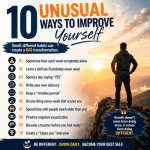 Here are 10 unusual ways to improve yourself. These go beyond the typical advice of “read more books” or “exercise regularly” and focus on developing your mind, confidence, and personal growth in unexpected ways.
1. Spend One Hour Each Week Completely Alone
Most people are constantly surrounded by noise, social media, or other people.
Deliberately spend one hour without your phone, music, or television. Just think, write, or observe and let your positive attitude take you further.
Benefits:
- Increases self-awareness
- Reduces stress
- Helps solve personal problems more creatively
2. Learn a Skill You’ll Probably Never Need
Take up something unusual such as:
- Lock picking (legally)
- Calligraphy
- Juggling
- Origami
- Morse code
Your brain loves novelty, and learning unfamiliar skills strengthens problem-solving abilities.
3. Spend a Day Saying “Yes”
Choose one day where you say yes to reasonable opportunities.
Examples:
- Talk to someone new.
- Try unfamiliar food.
- Attend an event.
- Learn something outside your comfort zone.
Many opportunities are lost because of automatic “no” responses.
4. Write Your Own Obituary
Imagine your life has ended.
What would you want people to remember about you?
This exercise often reveals:
- What truly matters
- What you’re neglecting
- What kind of person you want to become
5. Keep a “Mistake Journal”
Instead of only writing achievements, record:
- What went wrong
- Why it happened
- What you learned
- How you’ll avoid repeating it
High performers improve because they study their failures without dwelling on them.
6. Do One Thing Every Week That Scares You (Slightly)
Not dangerous things—but uncomfortable ones.
Examples:
- Give a compliment to a stranger.
- Speak first in a meeting.
- Post your work online.
- Ask for feedback.
Confidence grows from repeated exposure to discomfort.
7. Spend Time With People Much Older Than You
Most people only seek advice from peers.
Older individuals often provide:
- Life perspective
- Financial wisdom
- Relationship advice
- Stories that no book can teach
Experience is one of the greatest teachers.
8. Practice “Negative Visualization”
Imagine temporarily losing something you value:
- Your health
- Your job
- Your home
- Someone you love
This ancient Stoic practice isn’t about pessimism—it builds gratitude and resilience.
9. Become a Teacher Before You Feel Ready
Teach what you’ve recently learned.
You don’t need to be an expert.
Explaining ideas forces you to:
- Understand concepts deeply
- Organize your thoughts
- Discover knowledge gaps
- Build confidence
Teaching accelerates learning.
10. Create a “Future You” Interview
Write an interview with yourself five years from now.
Ask questions like:
- What habits changed your life?
- What mistakes did you stop making?
- What are you most proud of?
- What advice would you give your younger self?
Then answer as your future self.
This technique helps clarify your goals and align today’s actions with the person you want to become.
Our Final Thoughts
Personal growth doesn’t always come from doing more—it often comes from doing different things. Small, unconventional habits can reshape your mindset, improve resilience, and open doors you never expected.
The key is consistency. Choose just one or two of these ideas and practice them for a month. The cumulative effect is often far greater than trying all ten at once. These unusual things will improve you