Someone With AI Skills Might Take Your Job
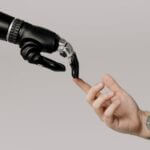 In the job market, the idea that someone with AI skills might take your job is no longer a distant concern but a present reality. The integration of artificial intelligence across various industries has brought with it both excitement and anxiety. On one hand, AI promises to revolutionize the way we work, offering efficiency and innovation. On the other hand, it raises the question: “Will AI take your job?”
The possibility of job displacement due to AI is a topic of frequent discussion, especially as AI continues to advance. Yet, while the fear of “will AI take my job” is understandable, it’s essential to approach the situation with a balanced perspective. Just as someone with AI skills might pose a competitive threat, AI also presents an opportunity to enhance your career. The real question is, “Can AI make you better at your job?”
To understand this, we need to delve into the “skills required for artificial intelligence jobs.” These aren’t just technical skills, like coding or data analysis, but also include problem-solving, creativity, and adaptability. In fact, the question of “what are the skills required for artificial intelligence” often extends beyond hard skills into soft skills, such as critical thinking and collaboration, which are equally crucial in an AI-driven world.
Consider a workplace where AI is being implemented. Someone with AI skills might seem poised to take over tasks traditionally done by others. However, this shift doesn’t necessarily mean the end of your career. Instead, it could signify a transformation. By learning how to work alongside AI, you can position yourself not as a competitor to AI but as a complement to it. This approach not only secures your job but also makes you indispensable in an increasingly AI-driven environment.
The fear that someone with AI skills might take your job often stems from a misunderstanding of AI’s role in the workplace. AI isn’t designed to replace humans but to augment their abilities. For example, in a creative industry, AI might handle data analysis, freeing up more time for you to focus on the creative process. Here, the notion of “will AI take your job” shifts to “how can AI make you better at your job.” The key lies in leveraging AI’s capabilities to enhance your own skill set.
As the workplace continues to evolve, the “skills required for artificial intelligence jobs” will increasingly define who thrives in the job market. These skills include a blend of technical expertise and an understanding of how AI can be applied to solve real-world problems. It’s not enough to simply know how to code; you must also be able to think critically about how AI can be used to drive innovation in your field.
In this context, someone with AI skills might seem like a threat, but they can also be a valuable collaborator. By working together, you can combine your unique expertise with their AI skills to achieve better outcomes. This collaboration mirrors the broader trend of AI and human workforces merging, rather than competing. In many ways, the answer to “will AI take my job” depends on how you choose to engage with this technology.
Understanding “what are the skills required for artificial intelligence” is the first step in ensuring that you remain competitive in the job market. These skills go beyond the technical and delve into areas like strategic thinking and the ability to apply AI to various business challenges. For example, being able to work with AI to improve efficiency or to develop new products can make you invaluable to your employer.
Ultimately, the fear that someone with AI skills might take your job can be alleviated by taking proactive steps to learn and adapt. This doesn’t mean you need to become a data scientist overnight, but rather that you should seek to understand how AI can be integrated into your role. Whether it’s through formal education, online courses, or hands-on experience, developing a familiarity with AI will not only protect your job but also open up new opportunities.
While the concern that someone with AI skills might take your job is valid, it’s important to recognize the broader context. AI is not an adversary but a tool that can enhance your career if approached correctly. By focusing on the “skills required for artificial intelligence jobs” and understanding “what are the skills required for artificial intelligence,” you can position yourself not just to survive in an AI-driven world but to thrive. The future of work will be defined by those who can adapt, learn, and collaborate with AI, turning potential threats into opportunities for growth and success.
 Feeling stuck in a content creation rut? Drowning in repetitive tasks that leave you yearning for the big, strategic ideas? You’re not alone. Online marketers today wear many hats, and the constant churn of content creation can leave little room for true innovation. But what if there was a way to reclaim your time and reignite your creative spark? Enter Artificial Intelligence (AI).