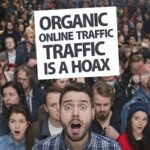
 Is online organic traffic real? The first time someone tried to sell bottled water, people laughed. Why would anyone pay for something they could get for free from the tap? The idea seemed absurd—until it wasn’t. Years later, the bottled water industry exploded, not because water itself had changed, but because perception had. People began to believe that convenience, purity, and premium quality were worth the price. What once seemed like a ridiculous concept became an unstoppable global industry, and those who saw the shift early reaped the rewards.
There’s something unsettling about realizing that the way you’ve always thought about something might be completely wrong. That’s what you’ve assumed to be fact could actually be an illusion, carefully constructed and perpetuated by those who benefit from your belief in it. And when you first hear it, there’s resistance. A voice inside that says, *No, that can’t be right. If that were true, everyone would know by now.* But history is full of examples where the truth was right in front of us all along, and only a few dared to see it.
Like the way people once thought the world was flat, or how doctors insisted washing hands before surgery was unnecessary. The problem isn’t just misinformation—it’s how deeply we hold onto ideas that feel safe, even when they work against us. We trust what’s familiar, what’s been repeated so often that it no longer gets questioned. And sometimes, that’s exactly what keeps us trapped, spinning our wheels in a system that was never designed to work in our favor.
The internet is a playground of illusions. It promises unlimited reach, effortless growth, and the dream of organic traffic flooding in, all without spending a dime. Businesses are told to chase search rankings, to pump out content, to wait patiently for the rewards of their effort. But what if that promise is just another beautifully packaged mirage? What if the game was rigged from the start?
Think about it. If online organic traffic were truly the answer, why do the biggest brands pour millions into paid ads? Why do algorithms change the moment people start figuring them out? Why does it feel like no matter how much content you create, you’re always playing catch-up? The truth is, free traffic isn’t free at all—it costs time, energy, and often delivers diminishing returns.
And yet, the belief persists. Because letting go of it would mean admitting that everything you’ve been told about online success might be wrong. It would mean facing the uncomfortable truth that playing by the rules of an ever-shifting system is a losing battle. That the path to visibility isn’t about waiting for Google’s approval—it’s about taking control.
The question isn’t whether online organic traffic is a hoax. The question is, how much longer will you let the illusion dictate your success? The ones who win don’t wait for an algorithm’s permission. They create systems that work in their favor. They bypass the noise and focus on strategies that deliver results, not just empty promises. The real secret? Understanding how to turn attention into action, not just traffic into hope. And once you see it, there’s no going back.