 You searched for the best wrist blood pressure monitor because something doesn’t feel right.
Maybe your doctor told you to start tracking your blood pressure regularly. Maybe you’ve seen inconsistent readings at home. Or maybe you’re just tired of dragging out a bulky cuff every time you want a quick check.
Here’s the problem: monitoring your blood pressure consistently is one of the most important things you can do for your long-term health, but most people don’t stick with it.
Why?
Because traditional monitors are inconvenient, uncomfortable, and easy to forget.
So readings become occasional instead of consistent… and that’s where the real risk lies.
What you actually need isn’t just a device, it’s a system that fits into your daily life without friction.
By the end of this guide, you’ll understand exactly what makes a wrist blood pressure monitor accurate, what most people get wrong, and how to choose a smarter solution that you’ll actually use every day.
Why This Is Harder Than It Should Be
On paper, checking your blood pressure at home sounds simple.
Buy a monitor. Wrap it around your arm. Press a button. Done.
But in reality, most people run into the same problems:
- Bulky upper-arm cuffs are uncomfortable and inconvenient
- Manual readings get forgotten after a few days
- Wrist monitors often get a bad reputation for being inaccurate
- No tracking system means you can’t see trends over time
Even worse, many people don’t realize that how you measure matters just as much as what you use.
A slightly loose cuff…
Incorrect wrist positioning…
Or inconsistent timing…
All of these can throw off your readings.
So people end up with numbers they don’t trust and eventually stop measuring altogether.
That’s why the “just buy a monitor” advice falls short.
The real challenge isn’t access. It’s accuracy + consistency + convenience, all at the same time.
The Key Insight
What Makes a Wrist Blood Pressure Monitor Accurate?
Most people assume wrist monitors are inherently less accurate.
That’s not entirely true.
The real difference comes down to **how well the device replicates medical-grade measurement conditions**.
Traditional hospital monitors use **inflatable cuffs** that apply controlled pressure to detect arterial changes. Basic wrist monitors often skip this level of precision.
But newer systems are solving this problem by combining two key technologies:
1. Dual-cuff inflation systems
Instead of a loose strap, the device tightens with controlled pressure, similar to a traditional cuff.
2. Advanced sensors + algorithms
High-precision sensors (like PPG) analyze blood flow patterns and calibrate readings in real time.
When these two elements work together, the result is a more reliable, consistent measurement without the bulk of a traditional device.
That’s the shift.
It’s no longer about choosing between “accurate” and “convenient.”
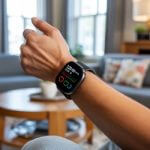
The latest generation of wearable monitors like this smartwatch-style blood pressure monitor are designed to bridge that gap, making it possible to check your blood pressure anytime without sacrificing reliability.
How It Works / What To Do
If your goal is to monitor your blood pressure effectively, here’s what actually works in practice:
Step 1: Make It Frictionless
The easier it is to measure, the more often you’ll do it.
That’s why wearable devices are gaining popularity. They remove the need to “prepare” for a reading.
Step 2: Measure Consistently
Instead of random checks, aim for:
- Same time each day
- Same position
- Minimal movement
Consistency matters more than frequency.
Step 3: Track Trends (Not Just Numbers)
One reading doesn’t tell you much.
But patterns over days and weeks? That’s where real insights come from.
Step 4: Use a Device That Does the Work for You
Modern wearable monitors automate most of this process:
- Automatic cuff inflation
- Built-in sensors for accuracy
- App-based tracking and analysis
- Family sharing for remote monitoring
If you want to see what that looks like in practice, this smartwatch blood pressure monitor is a good example of how all these elements come together in one device:
It’s not the only option, but it represents the direction this technology is heading.
Proof & Results
What kind of results can you realistically expect from switching to a wearable blood pressure monitor?
Here’s what typically changes:
Week 1:
You go from “I should check my BP” to actually checking it daily because it’s already on your wrist.
Weeks 2–3:
You start noticing patterns:
- Higher readings in the morning
- Changes after stress or activity
- Improvements with better sleep or diet
Month 1+:
You now have a data history, not just isolated numbers.
This is where the real value kicks in.
Instead of guessing, you can:
- Share accurate data with your doctor
- Spot early warning signs
- Adjust habits with confidence
Users who switch to wearable monitoring often report 2–3x more frequent measurements, which leads to better awareness and more stable long-term control.
Not because the device is magical, but because it removes the friction that was stopping them before.
Frequent Ask Ouestions
Are wrist blood pressure monitors accurate?
Yes. When used correctly and designed with proper technology like inflatable cuffs and advanced sensors, they can be highly accurate within a small margin.
Is a smartwatch blood pressure monitor better than a traditional cuff?
It depends on your goal. Traditional cuffs are great for occasional readings, but smartwatches are better for consistent daily tracking and convenience.
How often should I check my blood pressure at home?
Most experts recommend once or twice daily at consistent times, especially if you’re monitoring a condition or tracking trends.
Conclusion
The biggest mistake people make with blood pressure monitoring isn’t choosing the wrong device. It’s choosing one they won’t actually use.
Accuracy matters. But consistency matters more.
And the easiest way to stay consistent is to make monitoring part of your everyday routine. Not a separate task.
That’s why wearable solutions are becoming the go-to option for people who want real insights, not just occasional readings.
If you’re curious how that looks in a real-world device, especially one that combines cuff-style accuracy with smartwatch convenience, it’s worth taking a closer look here