Ex Factor 2.0 Review – Can Brad Browning Really Help You Get Your Ex Back
 The Ex Factor 2.0 Review explains to you why relationships are complicated. Breakups are even more complicated.
When someone you love suddenly walks away, it’s natural to search for answers. You replay conversations in your mind, wonder where everything went wrong, and desperately hope there’s still a chance to fix things.
That’s exactly why relationship recovery programs have become so popular.
One program that consistently stands out is Ex Factor 2.0 by Brad Browning.
Unlike many “get your ex back” products that rely on empty promises or manipulative gimmicks, Ex Factor 2.0 takes a surprisingly structured and psychologically driven approach. After exploring the program and reviewing the accompanying handbook, it’s clear that Brad Browning focuses less on chasing your ex and more on changing yourself first—a refreshing perspective that many relationship experts overlook.
So, is Ex Factor 2.0 worth your time and money?
Let’s dive in.
Who Is Brad Browning?
Brad Browning is a certified relationship coach who has spent years helping couples repair broken relationships and rebuild emotional connections.
His advice isn’t based on fairy-tale romance or unrealistic Hollywood endings.
Instead, his methods revolve around understanding human psychology, attraction, emotional recovery, communication, and rebuilding trust.
That practical approach is one of the biggest strengths of Ex Factor 2.0.
What Is Included?
The complete Ex Factor 2.0 package offers considerably more than a single ebook.
You’ll receive:
- A professionally written PDF guide
- Audio version for listening on the go
- Video training modules
- Bonus relationship resources
- Step-by-step action plans
- Text messaging examples
- Psychological communication techniques
Everything is delivered instantly after purchase, allowing users to begin immediately without waiting for shipping.
What Makes Ex Factor 2.0 Different?
After reviewing dozens of relationship products over the years, one thing becomes obvious:
Most programs focus entirely on getting your ex to respond.
Brad Browning takes a different route.
He first teaches readers how to become someone their ex might actually want to reconnect with.
That distinction matters.
Rather than encouraging emotional begging, repeated texting, or grand romantic gestures, the guide emphasizes rebuilding confidence, correcting unhealthy habits, and becoming emotionally attractive again. The sample handbook, for example, discusses recognizing behaviors that often damage attraction—such as insecurity, jealousy, excessive control, and complacency—before moving on to communication strategies.
The Four-Step Recovery System
One aspect I genuinely liked is that the program follows a logical progression.
Instead of throwing random dating advice at readers, Brad organizes the recovery process into four clear stages.
Step One: Understanding Why the Relationship Ended
Many people never truly understand why their relationship failed.
Brad argues that breakups are often driven by a gradual loss of attraction rather than the reasons people commonly give during emotional conversations. He encourages readers to honestly evaluate their own behaviors and identify patterns that may have contributed to the breakup.
This kind of self-reflection is valuable whether or not the relationship is ultimately repaired.
Step Two: The Isolation Period
This may be the most misunderstood concept.
Many people have heard about the “No Contact Rule.”
Brad expands on that idea considerably.
Rather than simply disappearing, he recommends using the period to:
- Improve your confidence
- Exercise regularly
- Develop new hobbies
- Spend time with friends
- Become emotionally independent
The handbook stresses that this phase is about creating a healthier version of yourself rather than merely waiting for your ex to miss you.
Step Three: Reopening Communication
One of my favorite parts of the program is the emphasis on subtle communication.
Instead of sending emotional messages like:
“I miss you.”
Brad suggests beginning with low-pressure conversations that have a natural purpose.
He even provides numerous examples of text messages and explains the psychology behind timing, pacing, and keeping conversations relaxed rather than desperate.
That practical guidance makes the advice much easier to apply.
Step Four: Rebuilding Attraction
Once communication has resumed naturally, Brad explains how attraction can gradually be rebuilt.
The handbook discusses simple concepts such as positive body language, appropriate eye contact, humor, and creating enjoyable interactions instead of rehashing old arguments. It emphasizes building a healthier relationship rather than trying to recreate the previous one.
Whether every suggestion will work for every couple is impossible to guarantee, but the overall focus on healthy communication and personal growth is a positive aspect of the program.
What I Really Liked
Practical Advice
Many relationship books stay theoretical.
Ex Factor 2.0 provides actual examples.
Readers aren’t left wondering what to say or how to begin conversations.
Easy to Understand
Despite covering relationship psychology, Brad writes in plain English.
The guide feels conversational rather than academic.
Comprehensive
Very few breakup scenarios appear to be ignored.
Whether you’re dealing with recent separation, emotional distance, or communication problems, there is usually relevant advice.
Multiple Learning Formats
Not everyone enjoys reading.
Including audio lessons and video training makes learning much easier.
Immediate Access
When someone is going through a breakup, waiting several days for shipping feels like forever.
Digital delivery means users can begin immediately.
Is Everything Perfect?
No relationship program can guarantee results.
Even Brad Browning cannot control another person’s decisions.
Relationships involve two people.
Some breakups happen because of serious issues like abuse, repeated dishonesty, incompatible life goals, or safety concerns. In those situations, reconciliation may not be appropriate or possible.
Readers should also remember that improving themselves is valuable regardless of whether the relationship is restored.
If getting your ex back happens, wonderful.
If not, you’ll still emerge as a stronger, healthier version of yourself.
Who Is This Program Best For?
Ex Factor 2.0 may be a good fit if:
- Your breakup happened recently.
- Communication hasn’t completely broken down.
- Both partners once had a healthy relationship.
- You’re willing to improve yourself.
- You’re looking for practical guidance instead of unrealistic promises.
It may not be suitable if:
- The relationship involved abuse or coercive behavior.
- Your ex has clearly stated they do not want further contact.
- There is legal or safety issues involved.
Final Verdict
Overall, I found Ex Factor 2.0 to be one of the more thoughtful relationship recovery guides available.
Rather than relying solely on emotional persuasion, Brad Browning combines relationship psychology with actionable exercises, communication strategies, and personal development.
The biggest lesson isn’t simply “get your ex back.”
It’s learning how to become a better partner first.
Whether that leads to rekindling an old relationship or building a healthier future with someone new, the principles are valuable.
Overall Rating: ⭐⭐⭐⭐⭐ (4.8/5)
If you’re serious about giving your relationship another chance—and you’re willing to put in the work—Ex Factor 2.0 is certainly worth considering.
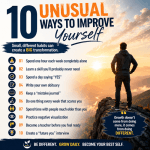 Here are 10 unusual ways to improve yourself. These go beyond the typical advice of “read more books” or “exercise regularly” and focus on developing your mind, confidence, and personal growth in unexpected ways.